


Modern businesses rely heavily on digital systems to manage operations, streamline processes, and maintain competitiveness in rapidly evolving markets. Enterprise Resource Planning (ERP) platforms play a crucial role in connecting different business functions such as accounting, inventory, sales, human resources, and customer management. However, standard ERP solutions often lack the flexibility needed to fully match a company’s unique operational workflows.
This is where Odoo Development Services become essential. Built around the flexible and modular architecture of Odoo, development services enable businesses to customize ERP modules, integrate external systems, and automate workflows tailored to specific operational requirements.
This guide explores how Odoo development services work, the types of customization and integrations available, and how organizations can leverage custom ERP solutions to improve efficiency, scalability, and workflow automation.
Enterprise Resource Planning systems are designed to unify business operations within a centralized platform. By connecting different departments and data sources, ERP systems help organizations improve transparency, streamline operations, and support data-driven decision-making.
However, every business operates differently. Companies may have specialized production processes, unique sales strategies, or industry-specific compliance requirements that cannot be fully supported by a standard ERP configuration.
Odoo Development Services allow organizations to tailor the ERP environment to their specific operational needs. Instead of forcing employees to adapt their workflows to the limitations of software, development services make it possible to design an ERP system that reflects the way a business actually operates.
Companies often adopt Odoo development services to achieve several strategic goals:
By leveraging development services around the Odoo platform, businesses can transform a standard ERP installation into a powerful, customized digital ecosystem.
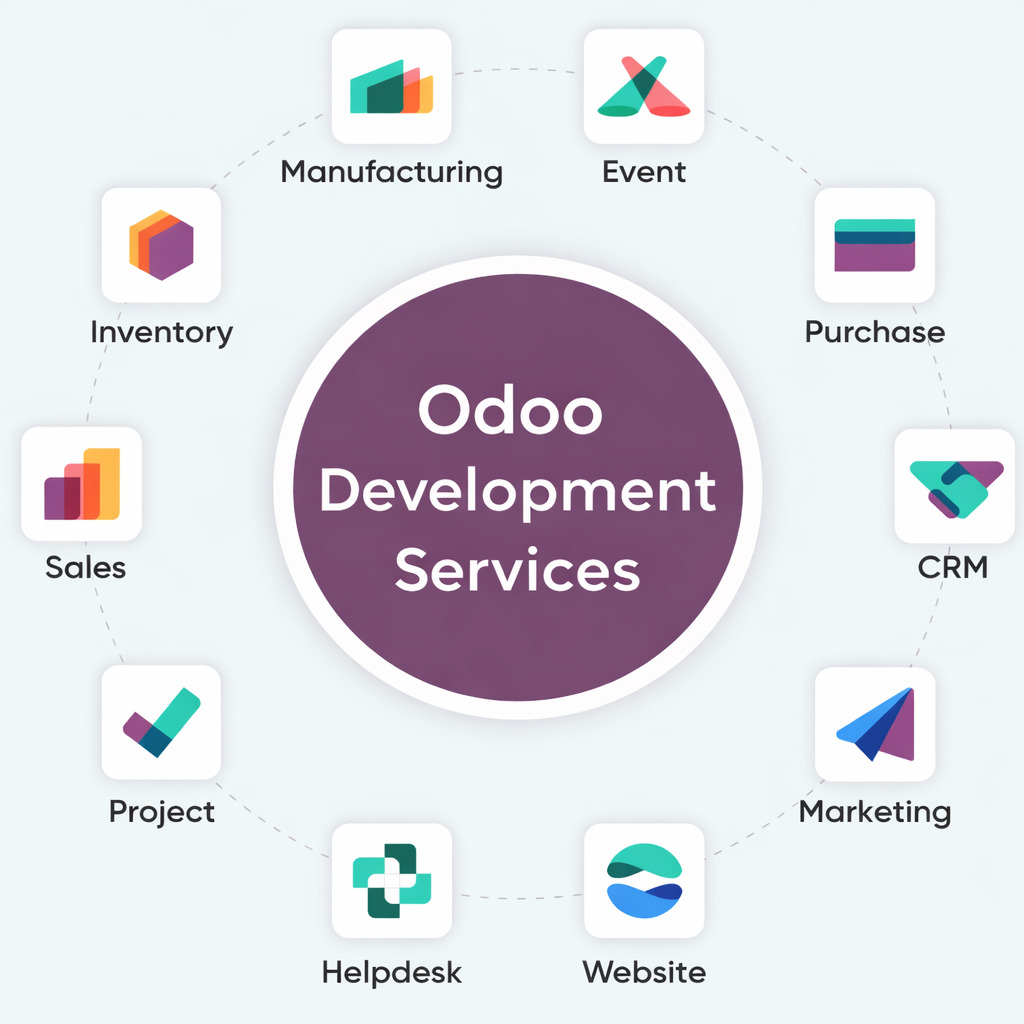
Odoo development services refer to the technical processes involved in extending and customizing the functionality of the Odoo ERP platform. Although Odoo provides a comprehensive set of default applications—including accounting, CRM, inventory management, and project management—many organizations require additional features or workflow adjustments.
Professional development services may include:
These services are typically delivered by developers with expertise in the architecture and framework of the Odoo ecosystem. Their role is to ensure that customizations remain stable, secure, and compatible with future upgrades.
Businesses adopting Odoo usually start with a standard implementation using built-in modules. This approach works well for organizations with relatively simple workflows or limited customization needs. However, as companies grow and operations become more complex, standard configurations may no longer provide sufficient flexibility.
AspectStandard Odoo ImplementationOdoo Development ServicesFlexibilityLimited to built-in modulesHighly customizableDeployment speedFasterRequires development timeInitial costLowerHigher but scalableBusiness alignmentGeneric workflowsTailored processesScalabilityModerateHigh
While standard implementations provide a quick starting point, development services enable organizations to build ERP systems that fully support their operational strategies.
Odoo development services generally focus on several key areas, each designed to enhance specific aspects of the ERP environment.
One of the most important aspects of Odoo development is the creation of custom modules. Because Odoo is built using a modular architecture, developers can add new functionality without modifying the core platform.
Custom modules can be designed to address industry-specific requirements such as:
For example, a manufacturing company may require a custom module that tracks machine maintenance schedules and production output, while a retail company may need a module designed to manage promotions and customer loyalty programs.
This modular approach ensures flexibility while maintaining compatibility with future system upgrades.
Customization services focus on modifying existing modules rather than building entirely new ones. Many organizations only need adjustments to existing workflows or user interfaces to improve system usability.
Typical customization activities include:
These modifications help organizations tailor the ERP system to the way employees work on a daily basis, improving adoption and productivity.
Modern businesses rarely rely on a single software platform. Instead, they use a variety of digital tools to manage different operational tasks. Integration services connect these tools with the Odoo ERP system, creating a unified digital environment.
Common integrations include:
By integrating these systems, businesses eliminate duplicate data entry and ensure that information flows seamlessly between departments.
Organizations often adopt Odoo after using legacy ERP systems that lack modern capabilities. Migration services help businesses transfer data and operations to the Odoo platform.
Typical migration tasks include:
Proper migration ensures that organizations retain valuable historical data while benefiting from the flexibility of a modern ERP platform.
The flexibility of Odoo development services is made possible by the platform’s modern technical architecture.
The Odoo platform is built using several powerful technologies that support scalability and performance.
Key components include:
Together, these technologies allow developers to create sophisticated ERP modules while maintaining system stability.
Odoo modules are structured using a layered architecture that separates different system functions.
Core module components include:
This design makes it possible to expand the ERP platform without affecting existing modules.
Developers working with Odoo rely on specialized tools to build, test, and deploy custom modules.
These tools include:
These tools help ensure that development projects remain efficient, reliable, and scalable.
Developing custom ERP solutions requires a structured approach to ensure successful implementation.
The development process begins with a detailed analysis of business requirements.
Activities during this stage include:
This stage ensures that developers clearly understand the organization’s operational needs.
After gathering requirements, developers design the architecture of the ERP system.
This stage includes:
A well-designed architecture provides a strong foundation for long-term ERP performance.
During development, engineers write the code that implements custom functionality.
Tasks may include:
Modules are typically developed incrementally and tested regularly throughout the process.
Testing is a critical step in ERP development because system failures can disrupt core business operations.
Testing procedures often include:
Comprehensive testing helps ensure that the final ERP system operates reliably.
After testing, the ERP system is deployed to the production environment.
Deployment may involve:
Post-launch support ensures that the system continues to operate smoothly as business requirements evolve.
Custom ERP development enables organizations across many industries to improve operational efficiency.
Manufacturing companies use Odoo development services to automate production workflows.
Examples include:
These features help manufacturers improve productivity while reducing operational downtime.
Retail organizations require accurate inventory management across multiple sales channels.
Custom ERP development can support:
These features help retailers deliver consistent customer experiences.
Logistics providers rely on real-time visibility across supply chain operations.
Custom ERP modules may include:
These capabilities help companies optimize transportation and delivery operations.
Sales teams often require advanced CRM capabilities that go beyond standard ERP tools.
Custom development can support:
These capabilities help businesses manage customer relationships more effectively.
Organizations that invest in professional Odoo development services gain several strategic advantages.
These benefits enable organizations to operate more efficiently while adapting to changing market conditions.
Selecting the right development partner is crucial for a successful ERP implementation.
Businesses should evaluate potential partners based on several criteria:
A strong development partner will provide both technical implementation and strategic guidance.
The cost of Odoo development services depends on several factors.
Cost FactorImpact on ProjectCustom module complexityHighThird-party integrationsModerateData migration requirementsModerateSystem complexityHighUser training and deploymentLow
Development projects typically follow three pricing models:
Understanding these pricing models helps businesses plan ERP investments effectively.
Despite its flexibility, ERP development projects can present certain challenges.
Common issues include:
Careful planning and experienced developers help minimize these risks.
Yes. The modular architecture of the Odoo platform allows developers to build industry-specific modules for sectors such as manufacturing, retail, logistics, and professional services.
An Odoo module is a software component that adds functionality to the ERP system. Modules can include database structures, user interfaces, automation rules, and reporting tools.
Customization modifies existing features within Odoo modules, while development involves creating new modules or complex integrations.
Industries that frequently benefit include manufacturing, retail, logistics, and professional services, where specialized workflows are required.
ERP platforms continue to evolve as businesses demand more automation and advanced analytics.
Future trends in Odoo development may include:
These innovations will allow organizations to deploy ERP solutions faster while maintaining flexibility.
Although Odoo development services offer significant advantages, organizations should consider potential risks before starting a customization project.
Key considerations include:
By addressing these considerations early, businesses can build a stable and scalable ERP ecosystem.
By leveraging the flexibility and modular architecture of Odoo, organizations can use Odoo Development Services to build custom ERP solutions, integrate modern business tools, and automate complex workflows. These capabilities enable businesses to operate more efficiently while maintaining the scalability required for long-term growth.