


Maintenance management is a critical part of business operations in industries that rely on machines, vehicles, and technical infrastructure. When equipment fails unexpectedly, companies can experience production delays, increased operational costs, and safety risks. For this reason, modern organizations are shifting toward proactive maintenance management systems that allow them to track equipment, plan preventive maintenance, and coordinate repairs efficiently.
One of the most effective solutions available today is the maintenance management application within Odoo. The Odoo Maintenance module helps businesses manage equipment assets, monitor maintenance activities, and implement preventive maintenance strategies within a unified ERP platform.
Instead of relying on spreadsheets or disconnected tools, organizations can manage equipment data, maintenance requests, and repair workflows in one system. This centralized approach not only improves operational visibility but also supports better planning and long-term asset reliability.
In this guide, we will explore the key features of Odoo Maintenance, how it enables equipment tracking, and how companies can implement preventive maintenance strategies to reduce downtime and improve productivity.
Maintenance management has evolved significantly over the past decade. Traditional approaches often relied on reactive repairs—fixing equipment only after it failed. While this approach might work for smaller organizations, it can lead to major disruptions in larger operations.
Modern enterprise systems take a proactive approach by integrating maintenance management into broader business processes. The Odoo Maintenance module is part of the comprehensive Odoo ERP ecosystem, which includes applications for inventory management, manufacturing, accounting, and project management.
By integrating maintenance management with other ERP modules, organizations gain several advantages:
This integration ensures that maintenance operations are aligned with overall business objectives.
The Odoo Maintenance module is designed to help organizations manage equipment reliability and maintenance activities in a structured way. It provides tools for tracking equipment assets, scheduling maintenance tasks, and coordinating repair workflows.
Maintenance teams can use the module to:
By centralizing these functions, businesses can ensure that maintenance operations are well organized and efficiently executed.
Maintenance management plays a vital role in enterprise resource planning because equipment reliability directly affects productivity and operational efficiency.
For example:
By incorporating maintenance management into ERP systems, organizations can coordinate maintenance activities with production schedules, inventory management, and financial planning.
Many organizations struggle with maintenance challenges that arise from manual processes and fragmented systems.
Common issues include:
The Odoo Maintenance module addresses these problems by providing a centralized platform for managing maintenance workflows and equipment data.
Maintenance automation is beneficial for organizations in various industries that rely on physical assets.
Industries that commonly use maintenance management systems include:
These industries benefit from maintenance automation because it helps reduce downtime and improve equipment reliability.
The Odoo Maintenance module offers several powerful features that allow organizations to manage equipment assets and maintenance activities efficiently.
These capabilities include asset management, maintenance request handling, preventive maintenance scheduling, and performance analytics.
Effective maintenance management begins with accurate equipment tracking. The Odoo Maintenance module provides a centralized database where organizations can register and manage their equipment assets.
Each equipment record may include:
Having all this information stored in a centralized system allows maintenance teams to quickly access asset data when performing inspections or repairs.
Registering equipment in the system ensures that all maintenance activities are linked to specific assets. Maintenance teams can create equipment profiles that include technical specifications and operational details.
This centralized registry provides a comprehensive view of equipment assets across the organization.
Equipment management involves tracking assets throughout their entire lifecycle.
Important lifecycle data includes:
Tracking this information allows organizations to evaluate asset performance and make informed decisions about repairs, upgrades, or replacements.
Maintenance requests are the core element of repair management in the Odoo Maintenance module. These requests initiate the process of identifying and resolving equipment issues.
Maintenance requests can be generated in several ways:
Once a request is created, it becomes part of the maintenance workflow and can be assigned to technicians.
A typical maintenance workflow follows these steps:
This structured workflow ensures that maintenance activities are properly tracked and documented.
Preventive maintenance is one of the most valuable features of the Odoo Maintenance module. Instead of waiting for equipment to fail, organizations can schedule routine maintenance tasks to prevent breakdowns.
Time-based maintenance schedules trigger maintenance tasks at regular intervals.
Examples include:
These schedules ensure that equipment receives routine servicing regardless of operational workload.
Some equipment requires maintenance based on usage rather than time.
Examples include:
Usage-based maintenance ensures that equipment is serviced according to actual operational demand.
Advanced maintenance strategies can use performance indicators to trigger maintenance tasks.
Examples include monitoring:
These indicators can signal potential equipment issues before they lead to failures.
Maintenance activities generate valuable data that organizations can analyze to improve asset reliability and maintenance efficiency.
Several key performance indicators help organizations evaluate maintenance performance:
Tracking these metrics helps maintenance teams optimize maintenance planning and resource allocation.
Maintenance dashboards provide visual insights into equipment performance and maintenance activities. Managers can identify recurring issues, monitor technician workloads, and evaluate maintenance efficiency.
Maintenance workflows in Odoo guide maintenance teams through the process of managing equipment and resolving technical issues.
Before maintenance activities can be tracked, equipment must be registered in the system. Each asset record contains technical specifications and operational information.
Maintenance teams can be organized by department, facility, or equipment type. Assigning responsibilities ensures that maintenance requests are handled by the appropriate technicians.
Maintenance requests can be created manually by employees or automatically through preventive maintenance schedules.
Maintenance managers assign technicians to tasks and schedule repairs based on priority and resource availability.
Technicians record the work performed during repairs, including spare parts used and time spent on the job.
Maintenance reports allow organizations to analyze equipment performance and improve maintenance strategies.
The Odoo Maintenance module supports several maintenance strategies designed to improve equipment reliability.
Corrective maintenance involves repairing equipment after a failure occurs.
This approach is typically used when failures are unpredictable or when preventive maintenance is not practical.
Preventive maintenance involves performing routine maintenance tasks to reduce the likelihood of equipment failures.
Regular inspections, lubrication, and calibration help extend equipment lifespan.
Predictive maintenance uses data analysis to anticipate equipment failures.
By monitoring performance indicators, maintenance teams can identify early warning signs of potential issues.
Maintenance management is closely tied to the equipment lifecycle.
When new equipment is purchased, it can be registered in the system along with technical specifications and warranty details.
Maintenance teams monitor equipment performance during daily operations.
Preventive maintenance ensures that equipment continues to operate efficiently.
When failures occur, maintenance teams initiate repair workflows to restore equipment functionality.
Maintenance data helps organizations determine when equipment should be replaced.
The Odoo Maintenance module integrates with several applications within the ERP ecosystem.
Equipment failures in production work centers can automatically trigger maintenance requests.
Spare parts used during repairs are automatically deducted from inventory.
Equipment issues affecting product quality can be identified and resolved through maintenance workflows.
Maintenance teams can manage repairs for equipment located in remote facilities or customer sites.
Organizations use the module to manage maintenance operations across different industries.
Examples include:
These use cases highlight the flexibility of the Odoo Maintenance module.
Companies that adopt the module often experience significant operational improvements.
Key benefits include:
These benefits contribute to improved operational efficiency and productivity.
Successful implementation requires both technology and effective operational processes.
Best practices include:
These practices ensure that organizations maximize the value of the maintenance system.
Organizations may encounter challenges when implementing maintenance systems.
Common issues include:
Addressing these challenges requires proper planning and operational discipline.
A Computerized Maintenance Management System (CMMS) focuses specifically on maintenance operations. The Odoo Maintenance module offers similar functionality but integrates maintenance activities with other ERP processes.
Organizations already using Odoo can often manage maintenance operations directly within the ERP system instead of using separate maintenance platforms.
The module can manage several types of equipment, including:
Dedicated maintenance platforms may offer specialized features, but Odoo provides the advantage of integrating maintenance data with other business operations.
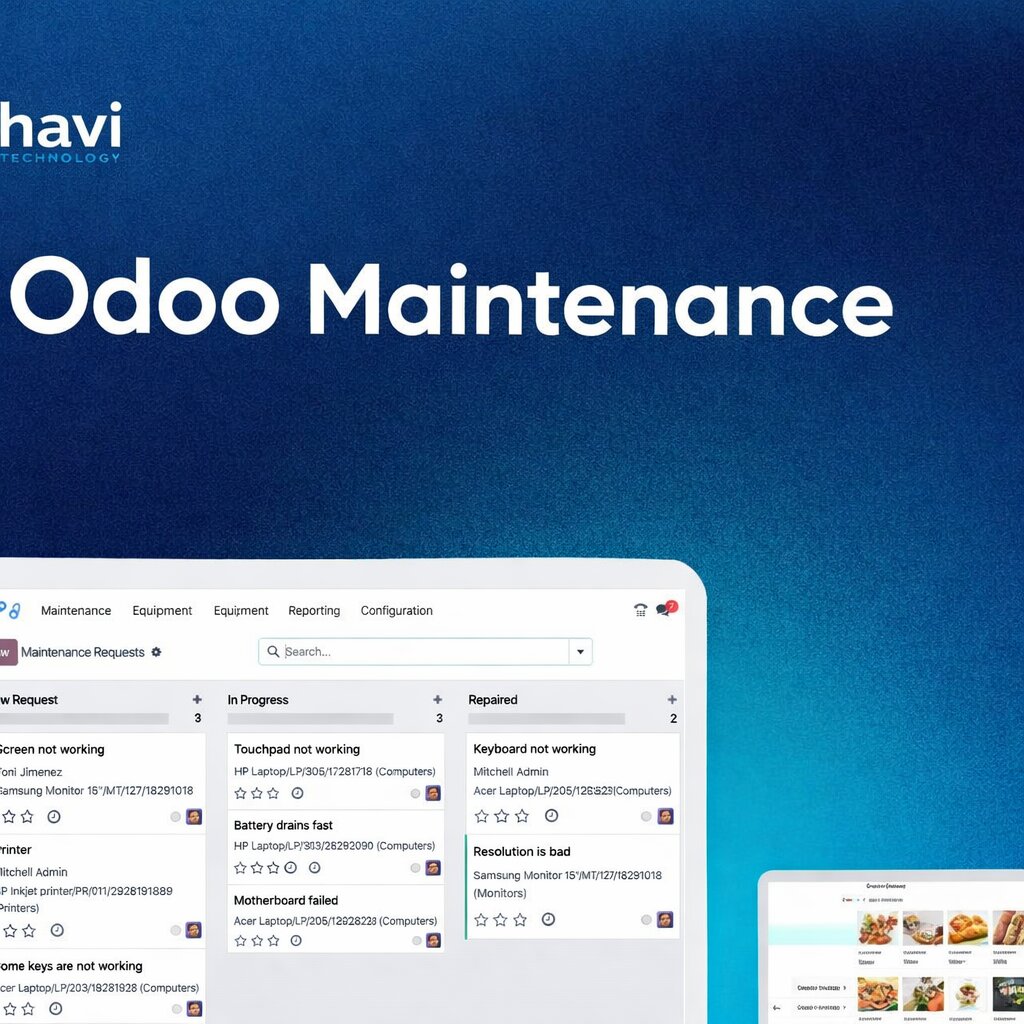
Maintenance management is evolving from reactive repairs to proactive asset management. The Odoo Maintenance module helps organizations adopt this modern approach by integrating equipment tracking, preventive maintenance scheduling, and repair workflows within a single ERP platform.
By leveraging maintenance data and structured workflows, businesses can improve asset reliability, reduce operational disruptions, and extend the lifespan of their equipment.
Ultimately, implementing Odoo Maintenance allows organizations to transform maintenance operations into a strategic capability that supports long-term operational success.