


In the restaurant industry, choosing the right Point of Sale (POS) system can define how efficiently a business operates, how well costs are controlled, and how scalable the operation becomes over time. What was once a simple cash register has evolved into a core operational system connecting front-of-house service, kitchen execution, inventory, accounting, and management reporting.
Among the many POS solutions available today, Odoo POS Restaurant stands out because it is not just a POS—it is part of a broader ERP ecosystem. This makes it powerful, flexible, and data-rich, but also more complex than traditional restaurant POS platforms.
Based on real-world advisory and implementation experience from Havi Technology, this guide provides a deep, practical analysis of Odoo POS Restaurant, focusing on its features, pricing structure, and operational risks. The objective is to help restaurant owners, managers, and decision-makers determine whether Odoo POS Restaurant is the right strategic choice for their business.
Odoo POS Restaurant is a restaurant-specific configuration of Odoo’s Point of Sale application, designed to support dine-in, takeaway, delivery, and hybrid food service models. It includes tools for table and floor management, order taking, kitchen coordination, billing, and reporting.
According to Havi Technology, the most important thing to understand is that Odoo POS Restaurant is not a standalone restaurant POS system. It operates as a module within the Odoo ERP platform, meaning it can seamlessly integrate with:
This architectural approach differentiates Odoo POS Restaurant from most dedicated restaurant POS solutions on the market.
Traditional restaurant POS systems are typically designed for speed, simplicity, and minimal setup. They often excel in quick-service or high-volume environments where ease of use is critical.
Odoo POS Restaurant, by contrast, focuses on process integration and data consistency. From Havi Technology’s experience, this difference explains why Odoo POS Restaurant can either transform restaurant operations—or feel overly complex if adopted without a clear strategy.
Key differences include:
Understanding this distinction is essential before evaluating features or pricing.
One of the most visible features of Odoo POS Restaurant is its digital floor plan and table management system. Restaurants can design layouts that match their physical space, including multiple floors, rooms, or sections.
In implementations delivered by Havi Technology, this feature improves front-of-house efficiency by providing real-time visibility into table status—occupied, free, reserved, or awaiting payment. During busy service periods, this clarity reduces errors and improves guest flow.
However, Havi Technology also notes that complex scenarios—such as merging and splitting tables—require well-defined operational rules and staff training to avoid confusion.
Restaurant service is dynamic. Customers frequently modify orders, add items, or request substitutions. Odoo POS Restaurant allows staff to adjust orders at any point during service.
From Havi Technology’s real-world experience, this flexibility enhances customer satisfaction but introduces risk if not properly controlled. Role-based permissions are essential to prevent unauthorized changes that can distort reporting or accountability.
Odoo POS Restaurant supports both traditional kitchen printers and modern kitchen display screens (KDS). Each approach has advantages:
According to Havi Technology, many restaurants begin with printers and later transition to screens as volume and complexity increase.
For full-service and fine dining restaurants, Odoo POS Restaurant supports delayed sending and course-based ordering. This allows starters, mains, and desserts to be sent to the kitchen at controlled times.
Havi Technology emphasizes that this feature only delivers value when paired with disciplined service workflows. Technology can support pacing, but it cannot replace trained staff and clear communication.
One of the strengths of Odoo POS Restaurant is its billing flexibility. Restaurants can:
Based on Havi Technology’s observations, this significantly improves the guest experience in group dining situations, where billing disputes are common.
Odoo POS Restaurant supports various tipping models, discounts, and promotional pricing rules. These can be configured to align with local regulations and internal policies.
Havi Technology recommends defining these rules carefully during implementation, as changes later can affect financial reporting, payroll, and staff incentives.
Restaurants often face complex tax requirements, especially when offering dine-in, takeaway, and delivery services. Odoo POS Restaurant allows different tax rules to be applied based on service type.
Misconfigured taxes are among the most common issues identified by Havi Technology, making expert configuration critical for compliance and accurate reporting.
Every transaction processed through Odoo POS Restaurant updates inventory in real time. When recipes and product mappings are configured correctly, ingredient consumption is tracked automatically.
According to Havi Technology, this integration is one of the strongest advantages of Odoo POS Restaurant. It enables accurate food cost tracking, reduces waste, and supports smarter purchasing decisions.
Unlike many POS systems that export sales data to external accounting software, Odoo POS Restaurant posts transactions directly into Odoo Accounting.
From Havi Technology’s perspective, this unified financial flow eliminates reconciliation errors and provides real-time insight into revenue, margins, and profitability.
Odoo pricing is modular. Restaurants typically pay for:
According to Havi Technology, the POS license itself is often a small portion of the total cost.
Implementation costs vary widely depending on:
Havi Technology consistently advises restaurants to budget realistically for implementation. Underestimating this phase is one of the most common causes of dissatisfaction.
Restaurants must also consider hardware costs, including:
Based on Havi Technology’s experience, these costs are frequently underestimated but have a direct impact on system performance and staff satisfaction.
For small cafés, Havi Technology finds that Odoo POS Restaurant is suitable when owners plan to scale or require strong inventory and reporting capabilities. For very small operations with minimal complexity, simpler POS solutions may be more cost-effective.
Mid-sized restaurants often benefit significantly from Odoo POS Restaurant’s integration and reporting. Havi Technology frequently sees improved cost control and operational visibility within the first year.
For restaurant groups, Odoo POS Restaurant offers centralized control, standardized processes, and consolidated reporting. Havi Technology often positions Odoo as a long-term platform rather than a short-term POS replacement in these scenarios.
Based on Havi Technology’s experience, common risks include:
Technical risks may include:
Havi Technology emphasizes thorough testing and phased rollouts to mitigate these risks.
Choosing Odoo POS Restaurant without a clear long-term strategy can lead to unnecessary costs. Havi Technology advises restaurants to evaluate not just current needs, but future growth plans before committing.
Successful Odoo POS Restaurant projects typically include:
According to Havi Technology, POS implementation is as much about people and processes as it is about software.
Fine dining establishments benefit from structured service workflows, course management, and detailed reporting. Havi Technology frequently recommends Odoo POS Restaurant in these environments.
For casual dining, suitability depends on growth ambitions and operational complexity. Havi Technology advises viewing Odoo POS Restaurant as a strategic investment rather than a quick fix.
Restaurants combining dine-in, takeaway, delivery, catering, or retail operations gain significant value from Odoo’s unified platform—a key reason Havi Technology supports it in these cases.
Yes, according to Havi Technology, particularly when scalability and data integration are priorities.
Yes, it can operate offline and synchronize data once connectivity is restored.
Based on Havi Technology’s projects, implementations typically range from a few weeks to several months depending on complexity.
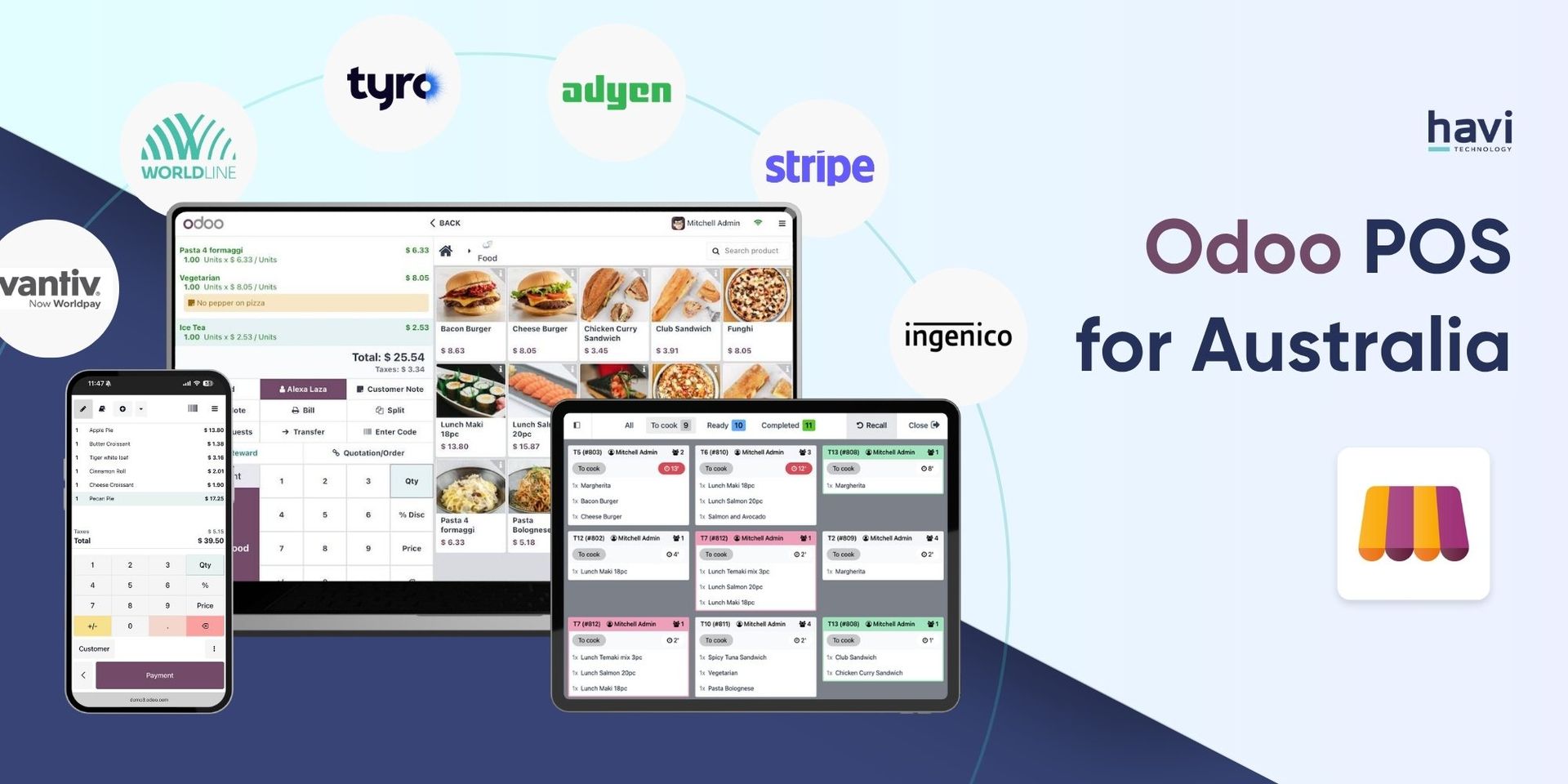
At the beginning of this guide, we positioned Odoo POS Restaurant as more than just a POS system. After examining its features, pricing, and risks, that conclusion remains clear.
From Havi Technology’s real-world evaluations, Odoo POS Restaurant is the right choice when restaurants:
When adopted with the right expectations and expert guidance, Odoo POS Restaurant can become a powerful operational backbone—supporting not just daily service, but long-term business success.